History
Before the Clubs: The Greenwich Village Coffeehouses That Invented Modern Stand-Up
Long before two-drink minimums, comics like Lenny Bruce, Joan Rivers, Woody Allen and Richard Pryor worked out a new kind of comedy between folk sets on MacDougal and Bleecker.
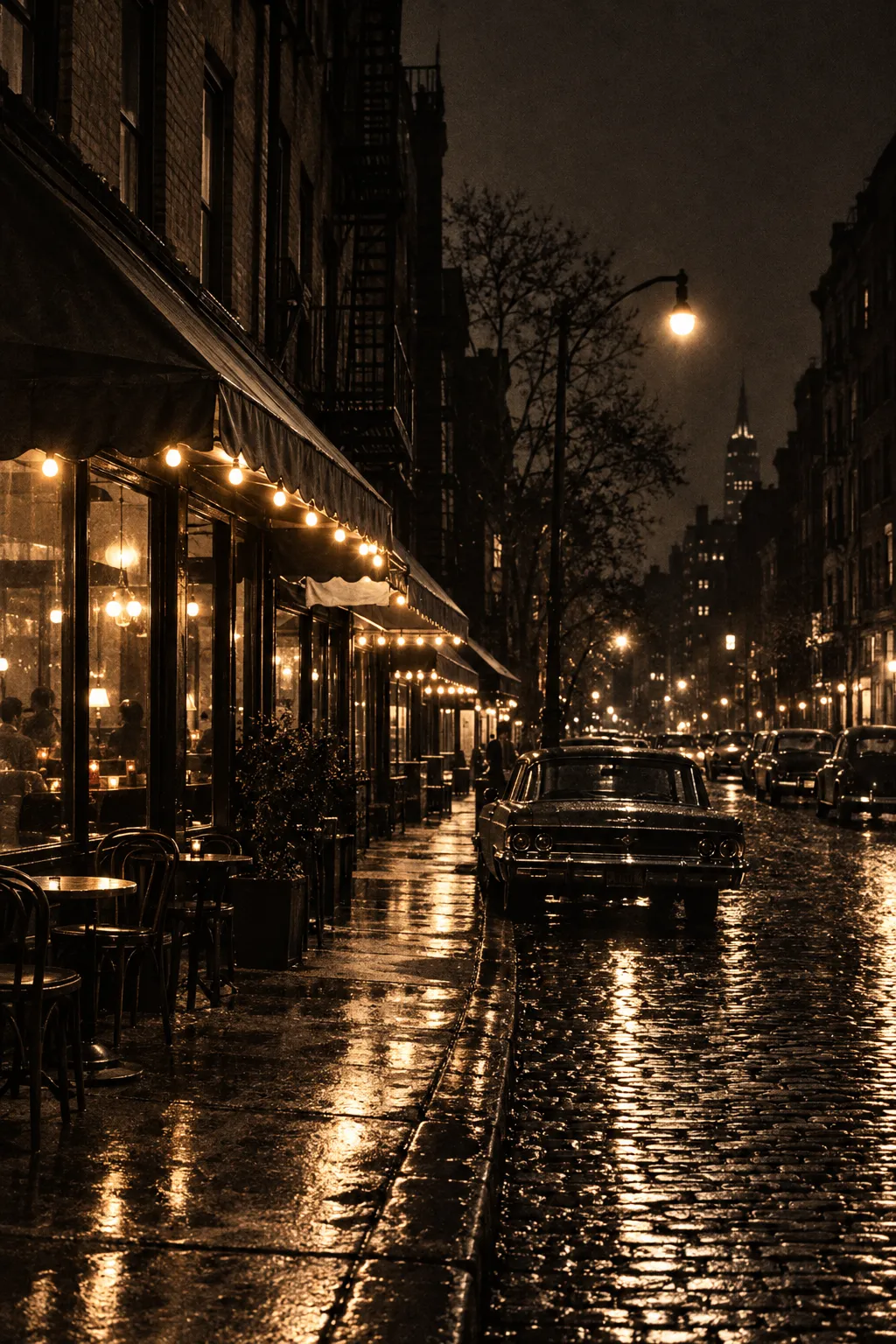
Stand-up comedy as we know it, meaning personal, political, unscripted and often a little dangerous, didn’t come out of nightclubs in tuxedos. Much of it came out of Greenwich Village coffeehouses where comics shared a stage with folk singers, beat poets and anyone else who signed up.
The basket houses
The Gaslight Café opened on MacDougal Street in 1958. It was a “basket house,” where a hat was passed and the money went to the artist (Village Preservation). In 1959 actor and World War II veteran Manny Roth opened Café Wha? at 115 MacDougal, in a former basement garage and horse stable. He tiled the floor and painted the walls himself (Wikipedia). Performers there were frequently paid from baskets passed around the audience (Wikipedia).
Two years later, Fred Weintraub, who had left a baby-carriage business, opened The Bitter End on Bleecker Street with its now-famous bare brick wall (Boston Globe).
Who came up there
The comedian roster reads like a hall of fame. Café Wha? gave early stage time to Woody Allen, Lenny Bruce, Joan Rivers, Bill Cosby and Richard Pryor (Wikipedia). The Bitter End added Dick Cavett, George Carlin, Billy Crystal, Robert Klein, Lily Tomlin and Flip Wilson (Boston Globe). Woody Allen was reportedly so nervous before his first set at the Bitter End that he tried to climb out a back window (PS Audio).
The Village clubs “allowed comics from off-the-beaten track to try out a newer kind of material: hipper, more political, more sexual, more idiosyncratic.”PBS, Make ’Em Laugh
Owners as the first managers
One pattern started here and shaped the whole pipeline: the person who owns the room also champions the talent. Manny Roth became Richard Pryor’s first manager (Café Wha?). Fifteen years later, Comic Strip owners Robert Wachs and Richard Tienken would do the same for Eddie Murphy (Hollywood Reporter).
The handoff to the clubs
In 1963, Budd Friedman opened the Improvisation in Hell’s Kitchen as an after-hours spot for Broadway performers. Comics soon arrived “from the coffeehouses,” Pryor and Carlin among the first (Fox Business). The Improv took the open, experimental spirit of the Village and gave it something new: a room built around stand-up. That model, and the brick wall behind the mic, became the template for comedy clubs everywhere.
Café Wha? and the Bitter End still operate today (Forbes). The Comedy Cellar sits right next door to Café Wha?, at 117 MacDougal, which makes the street one of the best places to walk through comedy history.
Keep reading
Thrown Out, Then Signed: How the Comic Strip Turned Eddie Murphy and Chris Rock Into Stars
A Bronx bingo-hall operator, a Harvard lawyer and a room on Second Avenue built the Upper East Side’s star factory, then managed the biggest comic of the 1980s.
The Table Upstairs: How the Comedy Cellar Became Comedy’s Clubhouse
A basement under a Middle Eastern café, a hostess turned booker, and one reserved table turned a struggling room into the most coveted stage in stand-up.
From the List to the Lineup: A Field Guide to New York’s Open Mic Economy
Five-dollar mics, barking for stage time, and bringer shows: the unglamorous ladder every New York comic climbs, and which rungs are worth it.