Pipeline
From the List to the Lineup: A Field Guide to New York’s Open Mic Economy
Five-dollar mics, barking for stage time, and bringer shows: the unglamorous ladder every New York comic climbs, and which rungs are worth it.
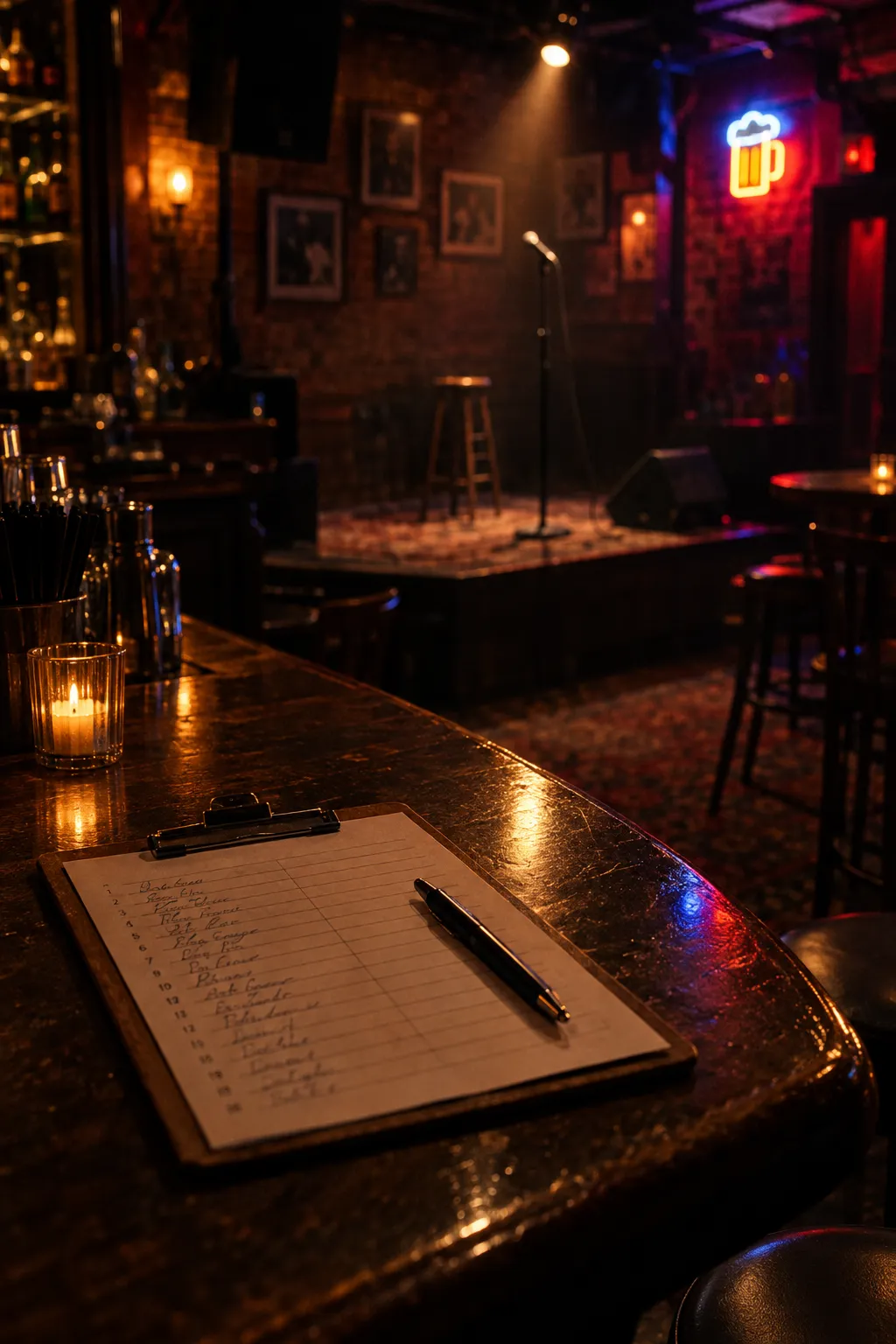
Every famous New York comic’s story has a chapter that rarely makes the documentary: the years of four-minute sets in bar back rooms, performing to other comics who are mostly checking their notes. That grind is the base of the city’s talent pipeline, and it has its own economy.
Rung one: the list mic
An open mic in New York is rarely glamorous. Picture a bar’s back room on a Tuesday afternoon, about 20 names on a list, and three to five minutes each (Mint Comedy). Mics happen in basements, coffee shops and sometimes actual laundromats. Working comics prefer the “list mic,” where you sign up and go on in order, with no money exchanged for stage time (Unlisted Event).
Many mics do charge, often about $5 for five minutes, sometimes just a drink purchase. A disciplined comic can hit two or three a night (NYC Comedy Class). That pay-to-play reality draws real criticism. Pete Holmes, who came up through Chicago’s scene, called New York’s mics “terrible” partly because you pay just to perform (Gothamist).
Rung two: barking
Barking means standing on a busy corner handing out flyers, usually for one to three hours, in exchange for five to ten minutes on a real club stage. Some clubs also pay a few dollars for each customer you bring in (NYC Comedy Class).
“Every night, for six months, I handed out flyers for two hours… rain or shine, snow or otherwise.”Pete Holmes on barking at the Boston Comedy Club, via Gothamist
For Holmes it paid off. The booker saw potential, let him host, and made him the house emcee, working weekends.
Rung three: the bringer (proceed with caution)
At a bringer show, you get a spot only if you bring paying guests, typically 5 to 15 of them, each facing a cover charge and a two-drink minimum. The format is widely seen as exploitative (Wikipedia). Many working comics call bringers “career poison,” because an audience of your friends laughs out of loyalty, not honest reaction (Unlisted Event).
That said, some newer bringer showcases do promise a real next step, such as a club talent consultant in the room or an invitation to audition for the owner (Comedy Mob). The rule of thumb: pay attention to who is watching, not just whether you get on.
Rung four: getting passed
The real goal is getting “passed,” meaning a club approves you to work its stage. Paths vary by club. Comics describe late-night five-minute spots after the main show, new-talent nights, audition lotteries, producing your own show at a club, or interning in exchange for stage time (Jocelyn Chia). At nearly every level, a referral from a trusted regular counts for more than any tape.
A common arc, in one comic-facing guide’s telling, is a year or two of mics, then small showcase bookings, then barking at bigger clubs, and eventually a booker noticing (Mint Comedy). There’s no shortcut, and that’s the point. The volume of stage time is what makes New York comics so sharp.
Keep reading
Thrown Out, Then Signed: How the Comic Strip Turned Eddie Murphy and Chris Rock Into Stars
A Bronx bingo-hall operator, a Harvard lawyer and a room on Second Avenue built the Upper East Side’s star factory, then managed the biggest comic of the 1980s.
The Table Upstairs: How the Comedy Cellar Became Comedy’s Clubhouse
A basement under a Middle Eastern café, a hostess turned booker, and one reserved table turned a struggling room into the most coveted stage in stand-up.
Before the Clubs: The Greenwich Village Coffeehouses That Invented Modern Stand-Up
Long before two-drink minimums, comics like Lenny Bruce, Joan Rivers, Woody Allen and Richard Pryor worked out a new kind of comedy between folk sets on MacDougal and Bleecker.